The speed with which spinal injuries occur can result in the loss of the potential for movement, but with appropriate measures taken for the injured patient, the loss of function can be prevented.
It is within the golden hour that everything is dealt with, including the prevention of inflammation and the beginning of expert care in the prevention of cord compression, which is a secondary injury. Apart from the hospitals, the key role is played by relatives and other first aiders, with minimal invasive spine surgery in Thane being the key in advanced care.
First Aid, Immediate: Immobilize to save mobility
One should immediately dial the numbers for the emergency services-108/911 without wasting any further seconds for assessment. Each second counts in averting irreparable damage to the cord. Keep the victim immobile.
Place rolled-up towels, jackets, or hands on either side of the head/neck gently but cautiously to make the head/neck immobile without rotating or tilting it. Do not move the injured person unless there is an immediate threat due to fire or explosion dangers. Spine alignment takes precedence over other aspects.
Check breathing and pulses without neck manipulation. Instead of head tilt, use the jaw-thrust maneuver to open an airway. If necessary, initiate chest compressions while the inline stabilization of the cervical spine can continue. If normal breathing is not possible, calm the victim with reassurance to reduce muscle spasms that contribute to pain and discomfort due to panic.
These basic actions account for 20-30% of preventing additional damage until trained caregivers arrive because basic actions are just perfectly done to keep a body in a perfect position until caregivers arrive. Logrolling backboards with no less than four people must only be done with properly trained individuals to perform a smooth motion, a perfectly executed action.
Control Swelling – the Secondary Killer
Edema reaches peaking levels 24 to 72 hours post-injury, pressing sensitive nerves irreversibly into paralysis if not addressed. Using ice packed in a cloth and cycling through 15-20 minute intervals every 2 hours to encourage vasoconstriction to prevent excessive fluid accumulation is encouraged, but only after securing initial stabilization. When dealing with head trauma, if it’s a cervical injury, it is ideal to elevate it, but not if it’s a thoracolumbar injury due to severe hypotension.
Positioning for the neutral spine: Keeping the patient supine on a hard surface, such as a backboard, with the knees flexed 30° using pillows to help unload the lumbar spine to maintain the lordotic position. Carefully monitor vital signs. Hypotension is likely a marker for neurogenic shock caused by the interruption of the cord; elevate the legs slowly, if trained to do so.
Hospital Arrival: Rapid Diagnostics and Steroids
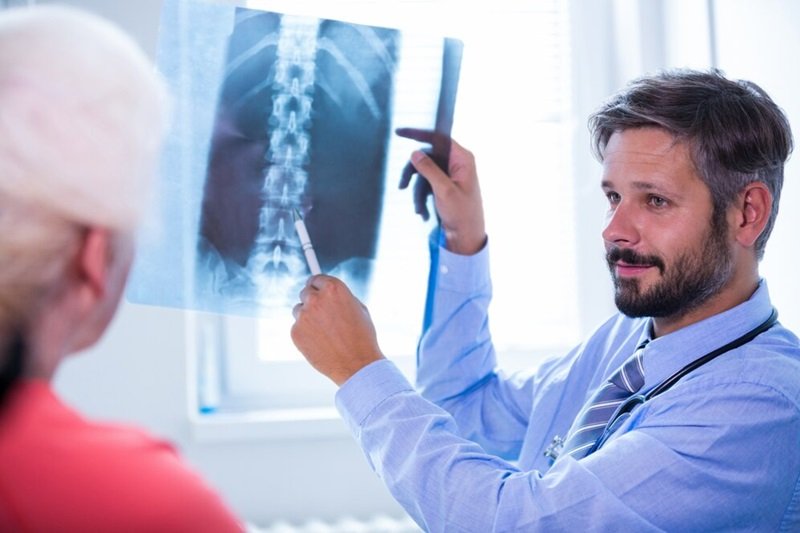
The protocols of ER include ATLAS in order: Airway, Breathing, Circulation, Disability, and Exposure. Then, the cascade of radiographic studies includes evaluation of CT for bony instability or fracture, followed by MRI for cord edema, ligament damage, or hematoma, according to surgical priority. High-dose methylprednisolone, according to NASCIS protocol, within 8 hours, decreases edema of the cord up to 50% for incomplete injuries. Still, its utility for complete transections is doubtful due to infection potential.
Best Spine Specialist in Thane uses Diffusion tensor imaging (DTI), which has been employed for early recovery outcome prediction by identifying salvageable tracts. Early decompression surgery within 24 hours has been capable of tripling the possibilities of walking for cervical injuries, which may also alter the prognosis from using a wheelchair to walking.
Surgical Intervention: Restore Alignment Fast
In situations like these, the benefit gained through minimal invasive spine surgery in Thane is immense. Compressive fragments are cleared out through an endoscopic discectomy. Fixation and realignment in unstable bursts or fractures are done via the insertion of pedicle screws through 1-cm ports in under 2 hours, reducing blood loss from 800 ml in an open procedure to 200 ml.
Laminectomy alleviates the pressure on the cord swiftly, and fusion with biologics inhibits the deformity and development of kyphosis. Robotic navigation allows surgeons to navigate with greater accuracy, reaching the level of perfection on a scale of sub-millimeters, thus lowering reoperation by 40%. Early surgery, within 48 hours, maintains 70% greater motor function compared to the delayed method.
Medications and Neuroprotection
The hormones decrease the edema by tapering in higher doses, and hyperosmolar agents such as mannitol draw the edema fluid from the cord. The low-molecular-weight heparin will prevent the formation of thrombi in the veins that may cause paralysis to the legs by the embolism that affects the lungs. Vasopressors such as norepinephrine will keep the MAP values above 85mmHg. The Gabapentinoids will provide pain relief without the respiratory depressant effects.
Early Mobilization: Fighting Atrophy
Within the timeframe of 24-48 hours, the ICU physiotherapy integrates the following: Ankle pumps prevent the accumulation of blood clots, while isometrics restore fundamental strength.
Passive range-of-motion exercises through the utilization of splints work on the prevention of joint contractures, which can lead to the locking effect on the joints.
Robotic exoskeletons like the Lokomat retrain walking patterns through the utilization of neuroplasticity. Patients can walk alone two weeks earlier.
Nutrients and Bladder Function
Hypermetabolism after the accident requires 35-40kcal/kg and 1.5g/kg protein-dense infusions to foster nerve regeneration and protect muscle mass. Tight glycemic control with values less than 140mg/dl facilitates axon sprouts. Intermittent catheterization avoids urinary tract infections and spastic bladders that impede standing transfers and mobility training.
Pain Management Without Sedation Traps
Multimodal pain management strategy using acetaminophen, NSAIDs, and specific nerve blocks avoids sedation and pulmonary problems. Epidural infusers offer extremely accurate spinal analgesia. Uncontrolled pain increases catecholamines, secondary to which ischemic pain decreases, inhibiting rehabilitation efforts.
Prevention of Complications
Systemic Vigilance Respiratory care manages cervical injuries that paralyze the diaphragm. BiPAP or ventils protect against aspiration pneumonias, which are major mobility enemies. IPC and SCD pumps prevent DVTs in the legs. Aggressive PU protocols, turned every two hours, and pressure-saving mattresses protect the skin integrity necessary for safe transfers. Psychological strategies alleviate depression, enhancing rehabilitation adherence by 60%, achieved either through individual or group therapy.
Rehab Continuum: Long-Term Protection
The best spine specialist in Thane recommends functional stimulation cycling therapy, novel stem cell treatments, and custom-made orthotics. DEXA scans predictively detect osteoporotic relapses induced by immobility annually.
Conclusions
Immediate strategies that include spinal immobilization, edema, diagnostics, and minimally invasive spine surgery counteract mobile destructive cascades induced in spinal injuries, allowing preservation of functionality and autonomy. Every technique, starting from accurate first-aid to skilled rehabilitation, holds the secret to complete spine recovery. Time equals neurological tissue.
React promptly, wisely, and successfully. From today, take good care of your backbone! Visit Neurospine Brain and Spine Clinic, fully equipped to address your spine and brain problems.